Vampirism
The Secret VampireVampirism in the story is more than a supernatural change of species: it is a condition that brings bodily signs and blood hunger, but also places its bearer inside a violent social history and a set of moral choices. The contrast between Callum, who remembers having been human, and Susie, whose new hunger leads to uncontrolled attacks, shows that becoming a Vampire does not by itself determine whether a person will protect others or endanger them.
Identity and Origins
The condition first appears against the history of Cape Town, where Vampires once held power under a king and queen while humans feared leaving their homes at night. The human mayor declared war, and the fighting became increasingly bloody. Humans eventually deployed a giant garlic bomb and holy water; Vampires died or retreated, and the humans anticipated a peace agreement requiring the survivors to live by the principle of No hunting and no biting. This history makes vampirism a public and political identity as well as a bodily one: to be a Vampire is to belong to a group associated with predation, but also to a community whose conduct can be challenged and constrained.
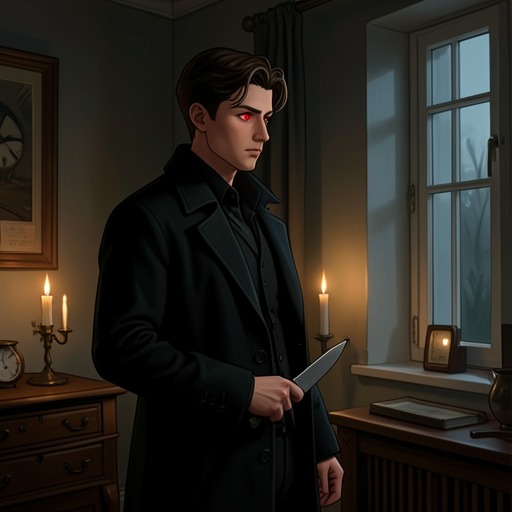
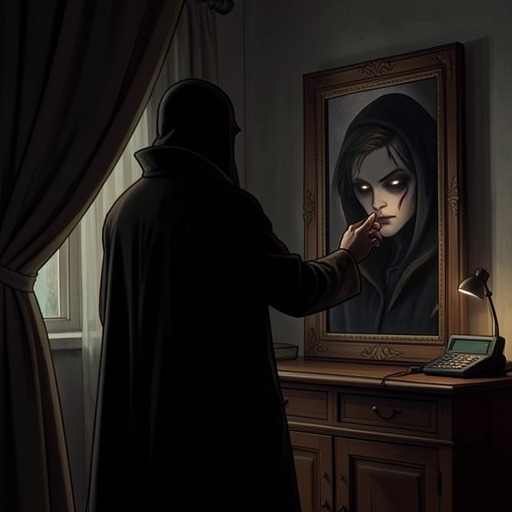
Callum’s arrival in that community is framed as an uncanny transition. After fleeing the wartime chaos, he falls, strikes his head, and wakes in an old-fashioned room without seeing his reflection in the mirror. Vlad tells him that he is dead and that he will become the royal couple’s son and legacy. During the birth of Carmilla’s daughter, Callum holds the newborn, whose eyes are red; Vlad names the girl a princess and Callum a prince, and Callum’s own eyes change from blue to red. The scene associates his new identity with death, royal adoption, and a visible bodily alteration, although it does not explain a precise mechanism by which his condition began.
Bodily Signs and Blood Hunger
Red eyes recur as a legible sign of vampirism. Callum displays them when he reveals what he is to Susie, and hers turn red when she becomes hungry and later encounters blood. The story also makes the absence of a reflection an early clue in Callum’s introduction. These signs allow other characters to recognize a Vampire, but they do not amount to a complete medical account of the condition.
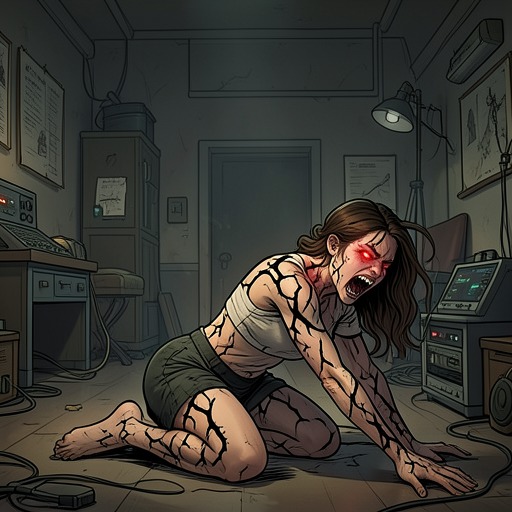
Susie’s experience makes hunger its most immediate physical consequence. After waking in the hospital with a bite wound on her neck, she cannot remember how she got there. Later, drawn by the smell from a small blood bank, she jumps over the counter, takes a blood bag, and licks it until her hunger is satisfied. She then collapses from weakness and is taken back to her room. The episode places her transformation between clinical care and supernatural need: nurses and doctors treat her wound, while her hunger leads her beyond ordinary hospital boundaries to blood.
The change also disrupts how Susie understands her future. She fears that she cannot return to college or live a normal life, and Callum recognizes the urge to feed while warning that killing people puts Vampires at risk. The condition thus changes both what the body demands and what its bearer believes possible in everyday human life.
Predation, Violence, and Responsibility
The danger of vampirism is shown through actions rather than treated as an inevitable fate. During the earlier war, Vampires kill humans, while humans respond with weapons designed to harm them. The conflict establishes a pattern in which bodily vulnerability and collective fear feed violence on both sides. Later, the doctor examining Susie’s neck interprets the wound as evidence that a wild beast tried to kill her, an explanation that registers the injury without understanding the supernatural change behind it.
Susie’s first uncontrolled feeding escalates beyond the blood bank. She kills people in town, and Callum finds her with red eyes. She calms briefly when he explains that he is also a Vampire, but he insists that she must stop killing. Her new condition has made her a danger to others, yet the story presents this behavior as something that can be confronted: Callum attempts to guide her rather than simply treating her as irredeemable. Later, Susie recognizes that she had been acting cruelly and apologizes to Celeste, showing that the violent conduct associated with her transformed state does not erase her capacity for remorse.
The distinction matters because the story repeatedly attaches labels to bodies and deeds. Susie is treated by the doctor as a possible victim of an animal attack, then becomes a feared predator in the town, while Celeste rejects the description of her sister as merely a monster. Susie’s vampirism explains her hunger and helps account for her danger, but it does not settle questions of responsibility, kinship, or who she may become.
Restraint, Law, and Belonging
The story offers several different forms of restraint. During the war, the proposed settlement would bind Vampires to No hunting and no biting. Later, Callum turns that principle into a direct political demand. After defeating Vlad in a duel, he refuses to rely on his father’s spoken promise not to feed on humans and produces a contract for Vlad to sign. Its terms express the possibility that humans and Vampires can coexist peacefully. The agreement shows a personal and political response to predation: the threat of violence is not answered only with stronger force, but also with a written commitment intended to govern future conduct.
Other characters respond to Vampire danger through physical force. Isabelle gives Celeste a wooden stake and explains that a stake through the heart can kill a Vampire. Celeste later uses one to destroy a nurse who has become dangerous in the hospital. The stake therefore functions as protection, but also makes the stakes of identifying someone as a Vampire severe. Recognition can prompt defense; misjudgment or fear can turn that defense into lethal action.
Callum’s own identity complicates the division between human and Vampire. He tells Carmilla that he was once human and asks whether she loves him less for it. Carmilla reassures him that she loves him and Elise equally. His memory of humanity informs his opposition to feeding on humans, while his royal place makes him capable of enforcing a new standard. In the ending, he succeeds Vlad as Vampire King. Vampirism persists as an inherited political condition, but the new ruler’s history gives the story a way to imagine power exercised under a different ethic.
Narrative Significance
Through Callum and Susie, vampirism is both a bodily transformation and a contested social label. Callum’s red eyes and royal status do not prevent him from opposing predation; Susie’s blood hunger and killings do not make remorse or restored family ties impossible. Their divergent paths prevent the condition from serving as a simple synonym for evil, even as the story makes its physical and social dangers unmistakable.
That tension connects the early war to the later peace agreement. At first, Vampires and humans are defined by mutual fear and lethal conflict. By the end, Callum rules as king after pursuing a signed restraint on feeding, and the future of the Vampire community is associated with coexistence rather than endless war. Vampirism remains a source of hunger, stigma, and risk, but the narrative’s decisive question is how those who bear it will act—and whether shared rules can keep difference from becoming violence.